When you’re dealing with heavy-duty projects—whether it’s managing cables in industrial facilities, securing equipment outdoors, or handling demanding applications at home—you need fastening solutions that won’t quit. That’s where SS304 stainless steel cable ties come in. Unlike traditional nylon ties that degrade under UV exposure, extreme temperatures, or harsh chemicals, stainless steel cable ties deliver reliability when it matters most.
If you’ve ever had a plastic zip tie snap at the worst possible moment, you know exactly what we’re talking about. That’s why professionals and DIY enthusiasts are switching to self-lock metal cable ties and heavy-duty industrial fastening solutions that actually last.
In this comprehensive guide, we’ll break down everything you need to know about stainless steel cable ties, their applications, sizes, and why SS304 is the material that separates good fastening from great fastening.
What Are SS304 Stainless Steel Cable Ties?
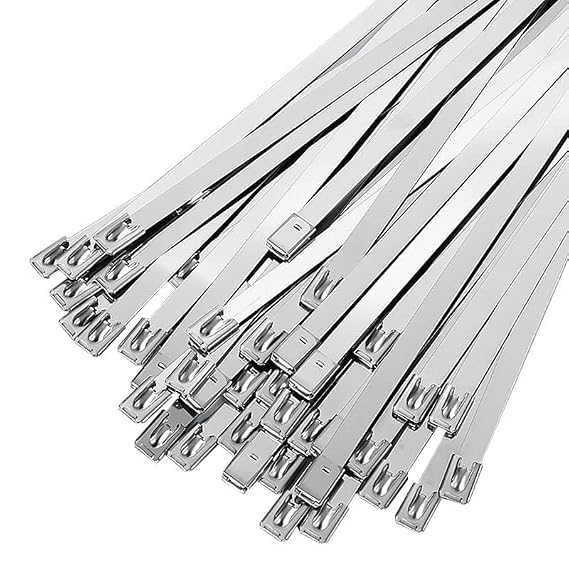
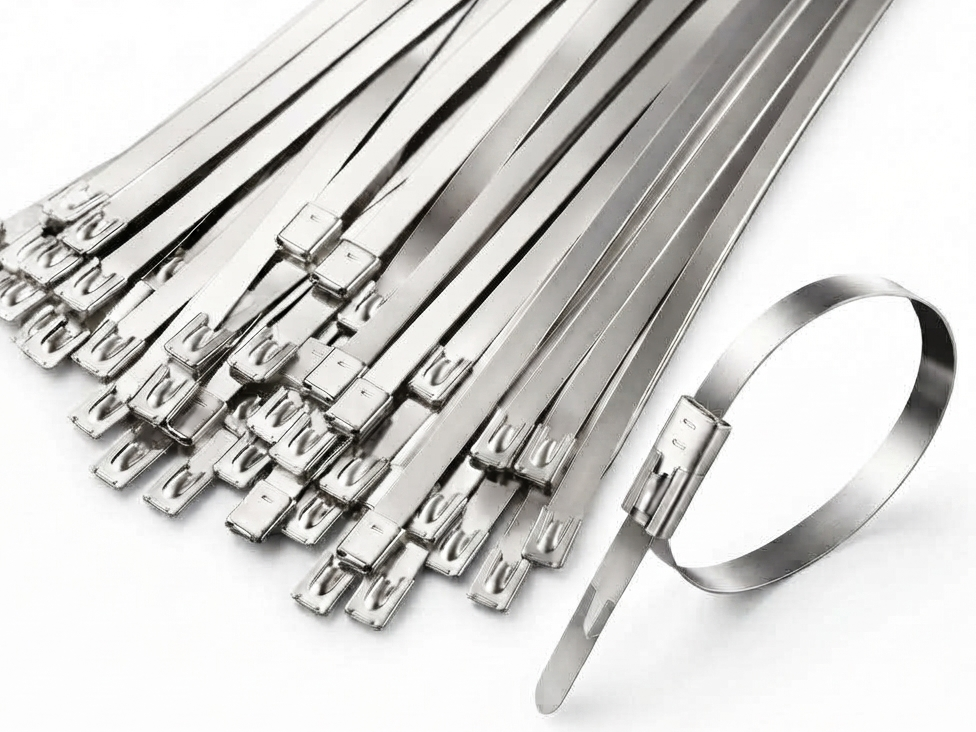
SS304 stainless steel cable ties are self-locking metal fasteners designed to bundle, secure, and organize cables and components in demanding environments. The SS stands for stainless steel, and 304 is the grade—a specific alloy composition that offers superior corrosion resistance compared to standard steel.
Here’s what makes them different:
Key Characteristics:
- Self-locking mechanism: Once tightened, these metal cable ties lock firmly in place without slipping
- Stainless steel construction: Resists rust, corrosion, and degradation from chemicals and moisture
- Heavy-duty performance: Built to withstand extreme temperatures, UV exposure, and physical stress
- Reusable design: Unlike single-use nylon ties, quality stainless steel ties can be loosened and retightened multiple times
- Professional-grade reliability: Used in aerospace, marine, chemical, and industrial applications worldwide
The self-lock mechanism is ingenious—a ratchet system on the tie head catches and holds the tail securely. Once locked, it won’t slip, unravel, or come loose, even under vibration or temperature fluctuations.
Why Choose SS304 Stainless Steel Cable Ties Over Nylon?
Let’s be honest: plastic zip ties are everywhere. They’re cheap and convenient for light-duty work. But they have serious limitations that stainless steel cable ties simply don’t:
| Feature | Nylon Cable Ties | SS304 Stainless Steel |
| UV Resistance | Fails in 6-12 months | Virtually permanent |
| Temperature Range | -40°C to 80°C | -100°C to 500°C |
| Chemical Resistance | Poor | Excellent |
| Reusability | One-time use | Reusable 10+ times |
| Saltwater/Marine | Deteriorates quickly | Corrosion-resistant |
| Cost (Long-term) | Frequent replacement | One-time investment |
| Industrial Certification | Limited | Meets aerospace & marine standards |
For industrial fastening solutions and high-performance fastening applications, there’s simply no comparison. Stainless steel wins every time.
Applications: Where SS304 Cable Ties Shine
The beauty of a quality industrial fastening solution is its versatility. Here are real-world applications where stainless steel cable ties outperform alternatives:
Industrial & Manufacturing
- Cable management in electrical panels and server rooms
- Equipment bundling in manufacturing plants
- Securing hoses and pipes in industrial settings
- Fastening components in vibration-prone machinery
Marine & Offshore
- Rigging and cable management on ships and boats
- Securing equipment in saltwater environments
- Subsea applications and underwater installations
- Long-term durability in harsh marine conditions
Automotive & Heavy Equipment
- Engine bay cable organization
- Securing wiring harnesses
- Fastening brake lines and hydraulic hoses
- Extreme temperature environments
Outdoor & Exposed Environments
- Roof-mounted equipment fastening
- Outdoor antenna and satellite installation
- Garden and landscaping applications
- Fence and gate securing
Chemical & Hazardous Environments
- Cable management near chemical storage
- Oil and gas industry applications
- Pharmaceutical manufacturing
- Food processing facilities (FDA-approved stainless steel options)
Home & DIY Projects
- Garage organization and tool storage
- Heavy equipment securing in workshops
- Outdoor structure assembly
- Permanent cable management solutions
A durable fastening solution designed for extreme environments where nylon ties would degrade, stainless steel cable ties are simply the professional choice.
Understanding SS304 Stainless Steel: The Material Matters
Not all stainless steel is created equal. SS304 is an austenitic stainless steel alloy containing:
- Iron: Base material (70%)
- Chromium: Adds corrosion resistance (18-20%)
- Nickel: Improves toughness and corrosion resistance (8-10%)
This composition gives SS304 cable ties several advantages:
- Superior corrosion resistance in most environments, including chloride and saltwater exposure
- High tensile strength for reliable load-holding capability
- Excellent ductility allowing the tie to flex without breaking
- Temperature stability performing well from cryogenic to high-heat conditions
- FDA compliance making it safe for food and beverage applications
When you invest in SS304, you’re choosing material science backed by decades of industrial use.
Heavy-Duty Cable Tie Sizes & Specifications
Our SS304 stainless steel cable ties come in various diameter sizes to match your specific fastening needs. Each size has an optimal application range—choosing the right one ensures maximum security and efficient bundle capacity.
Available Diameter Sizes:
Small Bundles (Light to Medium Duty):
- 100 X 4.6 MM — Ideal for small cable bundles, decorative applications
- 150 X 4.6 MM — Standard office and light industrial use
Medium Bundles (Medium to Heavy Duty):
- 200 X 4.6 MM — General-purpose cable management
- 250 X 4.6 MM — Larger cable bundles, hose fastening
- 300 X 4.6 MM — Heavy industrial applications
Heavy-Duty & Industrial (Extreme Conditions):
- 360 X 4.6 MM — Large diameter bundling, extreme-duty fastening
- 400 X 4.6 MM — Heavy equipment securing
- 450 X 4.6 MM — Maximum-capacity bundling
- 520 X 4.6 MM — Industrial-grade heavy securing
- 600 X 4.6 MM — Largest capacity, specialized industrial use
The 4.6 MM thickness across all sizes provides consistent tensile strength and durability. The width-to-thickness ratio ensures the tie won’t twist or deform under load.
How to Choose Your Size:
- Measure your bundle diameter at its widest point
- Add 1-2 inches for comfortable tightening without over-stress
- Select the next size up if your bundle is borderline
- Consider future expansion if cables may be added later
- Go industrial-grade if the application involves vibration or extreme temperature
Advantages of Metal Cable Ties vs. Plastic Alternatives
Choosing a metal cable tie over traditional nylon represents a shift toward reliability, sustainability, and long-term value:
Performance Benefits:
- No degradation from sunlight, UV, or outdoor weathering
- Resistance to temperature extremes that would shatter plastic
- Won’t become brittle or crack over time
- Maintain holding strength for 20+ years
- No plastic waste or environmental concern
Practical Benefits:
- Reusable—loosen and retighten as needed
- Better load capacity without slipping
- Professional appearance suitable for customer-visible installations
- Reduced total cost of ownership through multiple uses
- Easier to manage and organize cables
Reliability Benefits:
- Meet industry standards for aerospace, marine, and automotive use
- Predictable performance under stress testing
- No surprise failures after months or years
- Backed by engineering documentation
Installation Guide: Getting the Most From Your Stainless Steel Cable Ties
Proper installation ensures maximum holding power and longevity. Here’s the professional approach:
Step-by-Step Installation:
- Prepare your bundle — Organize cables or components you want to secure
- Position the tie — Wrap it around the bundle at the desired location
- Thread the tail — Insert the free end through the locking head loop
- Hand-tighten initially — Get the bundle organized without full pressure
- Final tightening — Pull the tail firmly until the bundle is secure (firm grip, not death-grip)
- Trim excess — For neatness, cut the tail close to the locking head (optional for reusability)
- Verify security — Give the bundle a gentle tug to confirm the tie is locked
Pro Tips:
- Don’t over-tighten synthetic or flexible hoses—stop when secure, not strangled
- For extreme-temperature applications, allow slight thermal expansion
- In vibration-prone environments, use ties slightly smaller than maximum bundle capacity
- For permanent installations, apply light tension to avoid stress concentration
Comparing SS304 to Other Stainless Grades
You might encounter SS316 stainless steel cable ties or other grades. Here’s how SS304 compares:
| Grade | Best For | Cost | Corrosion Resistance |
| SS304 | General industrial, most applications | Standard | Excellent (standard) |
| SS316 | Marine, chemical, extreme corrosion | Higher | Superior (chloride resistance) |
| Mild Steel | Temporary, non-corrosive | Lowest | Poor (rusts easily) |
| Plastic (Nylon) | Low-cost, light-duty | Cheapest | N/A (degrades) |
For 95% of applications, SS304 delivers exceptional value. If you’re working directly in saltwater or handling aggressive chemicals, SS316 offers marginal benefits at higher cost.
Making Your Final Decision: Is SS304 Right for You?
Here’s the honest truth: stainless steel cable ties cost more upfront than nylon. A premium metal tie might cost 5-10x more per unit than a plastic alternative.
But factor in the total cost of ownership:
- One stainless steel tie used 5-10 times = cost per use drops dramatically
- Nylon ties that fail and need replacement = ongoing costs
- Peace of mind knowing your cables won’t slip or fail = priceless
- Professional appearance for customer-facing installations = worth the investment
- Environmental responsibility = fewer plastic fasteners in landfills
If you’re managing cables or fastening equipment where failure has consequences—safety risks, operational downtime, or costly replacement—stainless steel cable ties are the intelligent choice.
Quick Reference: Size Selection Chart
| Bundle Diameter | Recommended Size | Best For |
| Up to 1″ | 100 X 4.6 MM | Small cables, decorative |
| 1-2″ | 150 X 4.6 MM | Office cables, light duty |
| 2-3″ | 200 X 4.6 MM | General purpose |
| 3-4″ | 250 X 4.6 MM | Medium bundles |
| 4-5″ | 300 X 4.6 MM | Heavy industrial |
| 5-6″ | 360 X 4.6 MM | Extra-heavy bundles |
| 6-7″ | 400 X 4.6 MM | Industrial equipment |
| 7-8″ | 450 X 4.6 MM | Maximum capacity |
| 8-9″ | 520 X 4.6 MM | Specialized industrial |
| 9″+ | 600 X 4.6 MM | Extreme-duty fastening |
Conclusion: Choose the Best Industrial Fastening Solution
SS304 stainless steel cable ties represent the evolution of fastening technology. They transform cable management from a recurring maintenance headache into a one-time investment that keeps working for decades.
Whether you’re running cables in a server room, securing equipment on a ship, managing automotive components, or organizing heavy-duty outdoor installations, a durable fastening solution designed for extreme environments where nylon ties would degrade is what you need.
The self-lock metal cable ties we offer come in sizes from 100 X 4.6 MM up to 600 X 4.6 MM, ensuring you have the perfect metal cable tie for your specific application. Each tie meets rigorous quality standards and delivers the high-performance fastening solution for industrial and home applications that professionals demand.
Stop settling for temporary, single-use solutions. Upgrade to stainless steel cable ties today, and experience the difference that professional-grade fastening makes.
FAQs: Your Questions About SS304 Stainless Steel Cable Ties Answered
1. Are stainless steel cable ties really reusable?
Yes, absolutely. Unlike nylon ties that break when cut, quality stainless steel ties can be loosened and retightened multiple times. You can use them as your cable arrangement evolves. This makes them cost-effective over their lifetime despite higher initial cost.
2. What’s the difference between SS304 and regular steel cable ties?
SS304 contains chromium and nickel that create a protective oxide layer, preventing rust. Regular steel cable ties will eventually rust and corrode, especially in humid or saltwater environments. SS304 resists this degradation for decades.
3. Can I use these ties in high-temperature environments?
Absolutely. SS304 stainless steel cable ties maintain their strength at temperatures up to 500°C and down to -100°C. Nylon ties would become brittle or melt at such extremes.
4. Which size should I choose for my application?
Measure your cable bundle’s diameter and add about 1-2 inches. Then select the corresponding size. When in doubt, go one size larger rather than smaller—it’s easier to manage and safer for long-term use.
5. How tight should I pull the tie?
Pull firmly until the bundle is secure and won’t slip, but don’t over-tighten. You want to hear or feel the locking mechanism engage. Think “firm handshake,” not “crushing grip.” Over-tightening can deform cables or hoses.
6. Are these ties food-safe?
SS304 is FDA-compliant when manufactured to food-grade specifications. Check product documentation for food-industry certifications. Standard industrial SS304 is safe but may not have specific food certifications.
7. How long do stainless steel cable ties last?
In normal industrial environments, 20-30+ years. The only real limit is physical damage or mechanical failure, not corrosion. They’ll outlast the equipment they’re holding together.
8. Can I use these in saltwater or marine applications?
Yes, this is one of SS304’s greatest strengths. The chromium creates a self-healing oxide layer that resists saltwater corrosion. While SS316 offers slightly better marine performance, SS304 is excellent and more affordable.
9. Do these ties meet any industry standards?
SS304 cable ties typically meet or exceed standards like ASTM, DIN, and various aerospace specifications. Check product documentation for specific certifications relevant to your industry.
10. Can I cut the tail of the tie, or does that weaken it?
Cutting the tail after installation doesn’t weaken the tie itself—the locking mechanism remains fully functional. However, if you want reusability, leaving extra tail gives you material to grip when loosening. For permanent installations, trim for neatness.
Ready to upgrade to professional-grade fastening? Choose SS304 stainless steel cable ties today.